

Height
23 – 25 cm
Adult Weight
5.5 – 8 kg
Life Span
12 – 16 years
Origin
Burma
Personality and Temperament
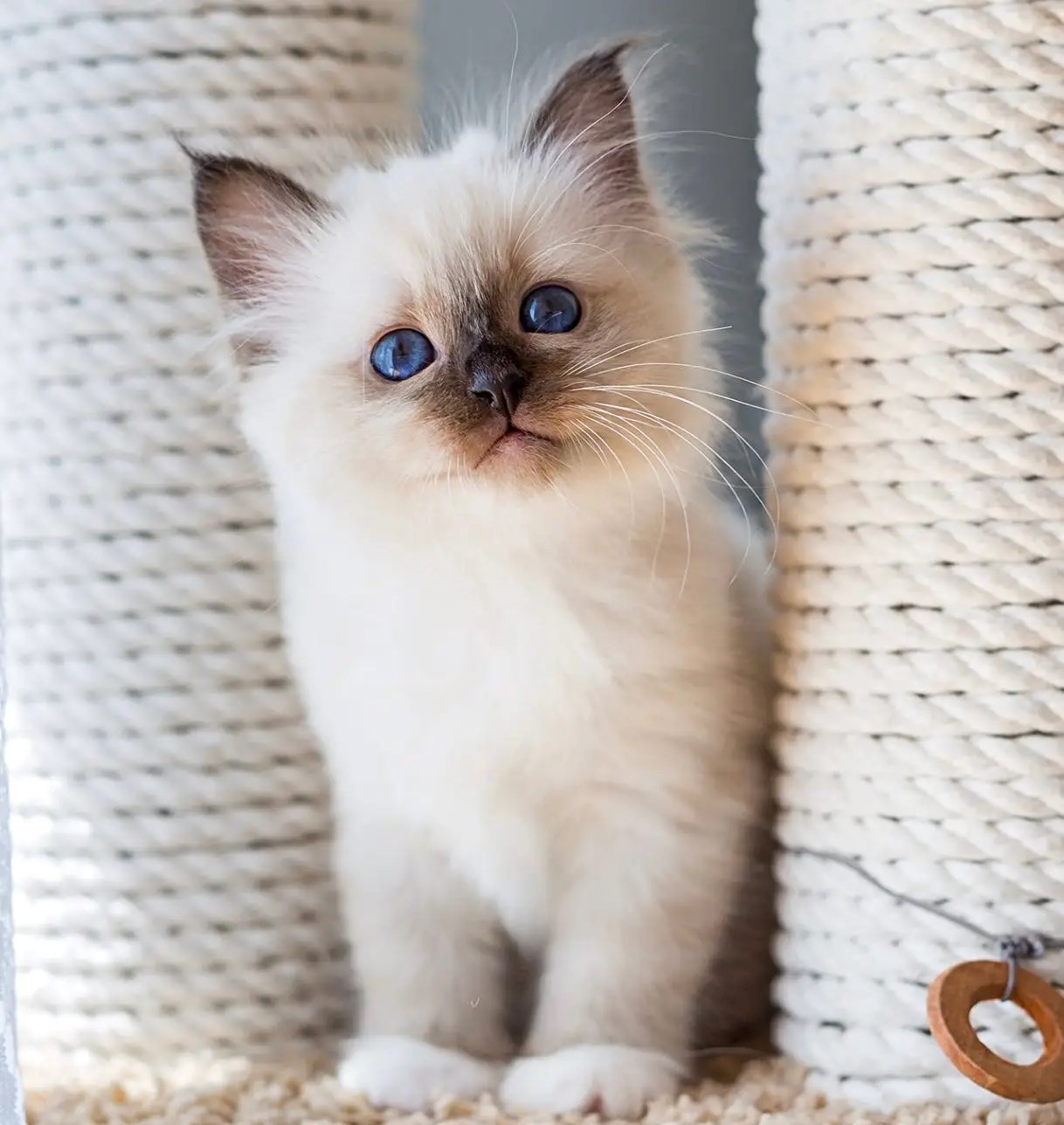
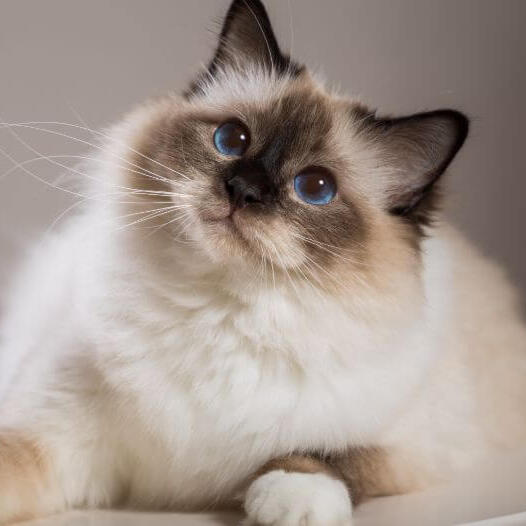
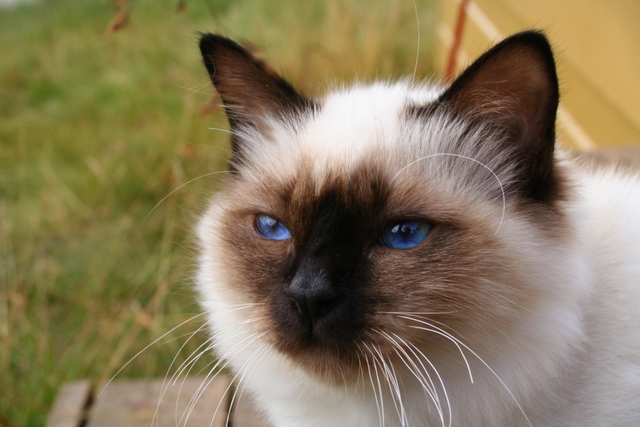
Often called the “Sacred Cat of Burma,” the Birman is famous for its silky, cream-colored coat with darker points similar to those of the Siamese. Its signature feature is its pure white “mitts” on all four paws, believed to symbolize purity. The breed’s striking deep blue eyes add to its charm and mystique.
Birmans tend to be gentle and reserved, sometimes shy around strangers. They often form a strong, loyal bond with one special person in the household, making them devoted companions.
The Birman’s origins are wrapped in legend: a white temple cat named Sinh was said to have been transformed by a dying priest’s blessing, gaining golden fur, blue eyes, brown legs, and white feet—the marks that define the breed today. In the early 20th century, two men helped save the temple and were gifted breeding pairs of Birman cats, which helped introduce the breed to Europe. It’s believed that early foundation Birmans may have had Siamese ancestry.
Care
Nutrition
Birmans thrive on a balanced diet rich in high-quality proteins. Feeding them premium wet or dry cat food designed for adult cats will keep their coat shiny and support their overall health. Because of their moderate size, it’s important to monitor portion sizes to prevent weight gain.
Grooming
Thanks to their medium-long silky coats, Birmans require regular grooming to prevent matting and reduce shedding. Brushing them two to three times a week is usually enough to keep their fur smooth and healthy. Don’t forget routine nail trimming and dental care to keep your Birman comfortable and happy.
Exercise
While Birmans aren’t as high-energy as some breeds, they enjoy interactive play and moderate activity. Providing toys, climbing posts, and play sessions helps keep them physically fit and mentally stimulated.
Health
Birmans are generally healthy cats but can be prone to certain genetic conditions such as hypertrophic cardiomyopathy (HCM) and kidney diseases. Regular veterinary check-ups and a healthy lifestyle help ensure your Birman lives a long, happy life.
History
The Birman cat, often called the “Sacred Cat of Burma,” carries an enchanting legend. According to the tale, a white temple cat named Sinh was transformed by a dying priest’s blessing at the Temple of Lao-Tsun, gaining a golden coat, striking blue eyes, darker points, and distinctive white “mitts” on its paws—the symbol of purity.
In reality, the breed was introduced to Europe in the early 1900s after the temple was raided again in 1919. Two men, Major Gordon Russell and Auguste Pavie, helped protect the temple priests, who in gratitude gifted them a pair of Birman cats. These cats were then brought to France, where the breed was developed and refined. It’s believed that early foundation Birmans had Siamese ancestry, helping shape their elegant appearance.