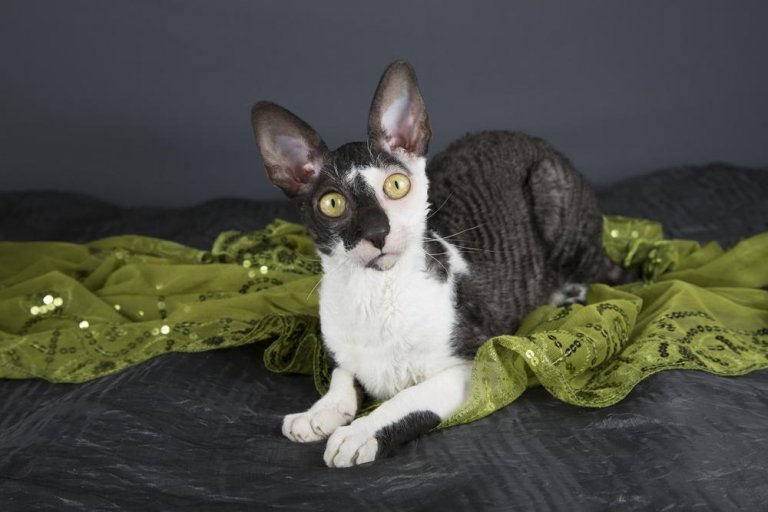


Height
30 x 35 cm
Adult Weight
2.5-4 kg
Life Span
9-13+ years
Origin
United Kingdom
Personality and Temperament
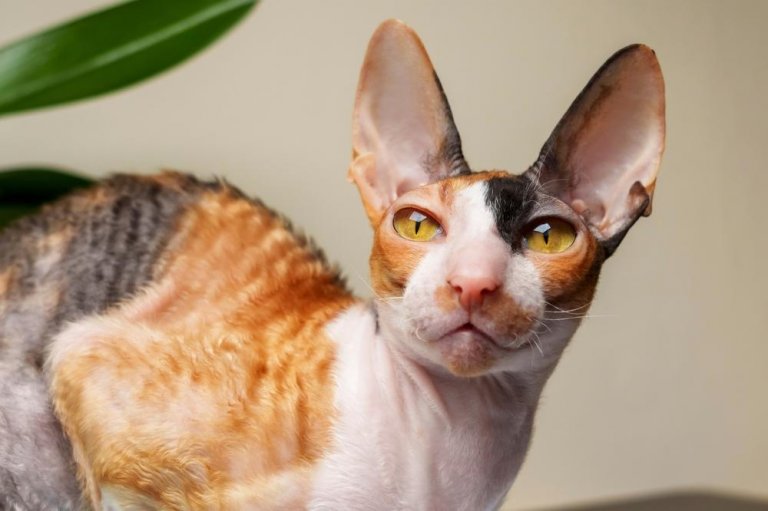
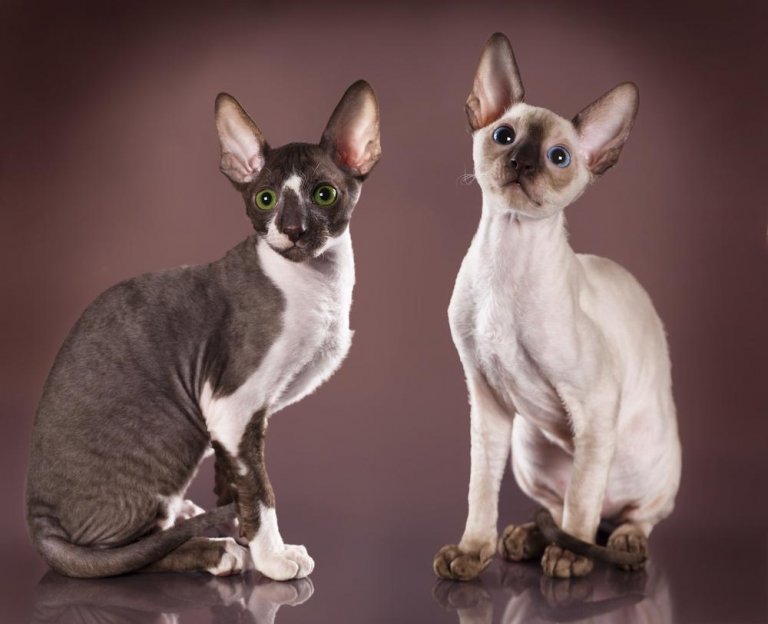
With their soft, curly coats and slender, graceful frames, Cornish Rex cats stand out from other breeds. Their unique, velvety fur requires a bit of special care, but the effort is well worth it for the abundance of affection they give in return. Known for their playful and active nature, Cornish Rex cats have extroverted personalities and love being the center of attention.
These cats are incredibly social and enjoy being involved in everything happening around them. They’re quick to make friends with anyone they meet and, if you’re looking for a lap cat, you’re in luck! The Cornish Rex loves to cuddle, partly because their short, downy coat doesn’t trap much heat, and partly because they’re naturally affectionate.
Since their coat doesn’t offer much protection from the sun’s UV rays in the summer or from the cold in the winter, Cornish Rex cats should be kept indoors. Even inside, they may appreciate a cozy sweater during the coldest months to stay warm.
Care
Nutration:
Cornish Rex cats don’t require any special dietary considerations. We suggest providing them with a premium-quality food that lists real meat as the first ingredient.
Grooming:
You might assume that Cornish Rex cats need little grooming because of their short coats. While it’s true they shed very little, their unique fur doesn’t absorb skin oils like other cats, which means they require regular baths. Most Cornish Rex cats will need a warm bath every week or two. If you decide to bring one into your home, it’s best to get them accustomed to bathing early on. Their coats dry quickly, but be sure to keep them warm until they’re fully dry. As with all cats, Cornish Rex cats benefit from regular dental care, including daily brushing and annual checkups with the vet. Don’t forget to trim their nails every few weeks, too.
Exercise:
Cornish Rex cats are incredibly agile with sleek, muscular bodies. They’re naturally playful and love to run, jump, and climb. To keep them happy and engaged, provide a cat tree, a cozy window perch, and plenty of toys. If these essentials aren’t available, don’t be surprised if your Cornish Rex starts making its own entertainment—climbing on furniture and swiping small items to bat around the house.
Health:
Cornish Rex cats are generally healthy, but like any breed, they can be prone to certain conditions. Without proper care, they may develop skin issues, and some cats are more likely to experience bald spots. Due to their sparse coats, Cornish Rex cats are also at risk of sunburn if they venture outdoors. During the summer months when the sun is strongest, it’s best to keep them indoors. If they do go outside, consider applying a pet-safe sunscreen to protect their sensitive skin. This breed can be prone to a musculoskeletal issue called patellar luxation, and heart disease, particularly hypertrophic cardiomyopathy (HCM), is also something to watch for. Additionally, some Cornish Rex cats, especially those with pure white coats, may have a genetic predisposition to deafness. This is more common in white-colored Cornish Rex cats than in those with other coat colors.
History
The Cornish Rex breed originated from a natural genetic mutation. It all began in Cornwall, England, when a barn cat gave birth to an unusual kitten in 1950. This kitten, named Kallibunker (or Kalli for short), had a unique short, curly red-and-white coat. Kalli’s owner, Nina Ennismore, decided to breed him back to his mother twice, and both litters produced curly-haired kittens.
Feline geneticists later discovered that the curly coat in Rex cats is a result of a recessive gene, meaning both parents must carry it for the mutation to appear. Over time, other breeds, including Burmese, Siamese, and British Shorthair, were introduced to the breeding program. While these crossbred kittens had normal short coats, they still carried the recessive gene, which led to subsequent litters with the signature short, curly coats.
Cornish Rex cats were brought to the United States in 1957, and by 1963, the breed had earned official recognition from both the American Cat Fanciers’ Association and the Canadian Cat Association. The Cat Fanciers’ Association gave its full approval in 1964. Today, Cornish Rex cats are loved worldwide and are recognized by all major cat registries.