

Height
30 – 35 cm
Adult Weight
2,5 – 4 kg
Life Span
10 – 15 years
Origin
United States
Personality and Temperament
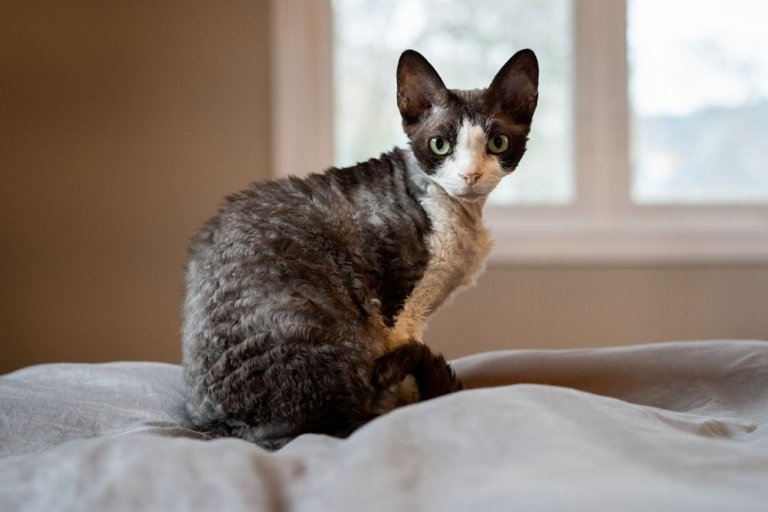
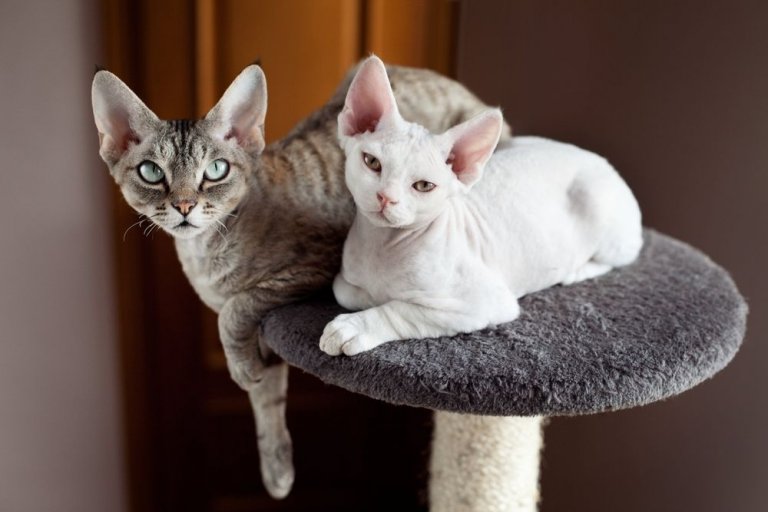
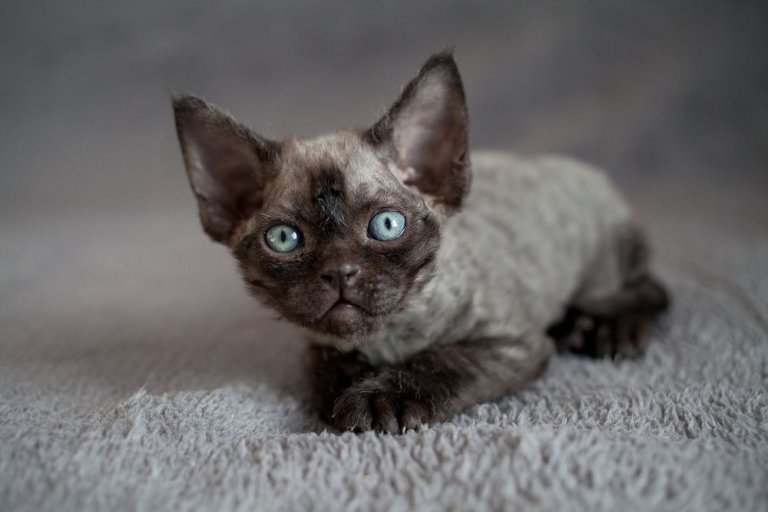
The Devon Rex cat is a beloved breed known for its petite size, pixie-like face, and friendly, sociable nature. One of its most distinctive features is its unique coat—ultra-soft, fine fur with a wavy texture that sets it apart from other cats.
If you’re looking for a cat that sheds very little, the Devon Rex is a great choice. While no cat breed is truly hypoallergenic, the Devon Rex’s fine, short coat sheds minimally, leaving hardly any traces of fur on furniture or clothing.
Their elfin facial features, including large, wide-set eyes and oversized bat-like ears, give them a magical, otherworldly appearance. Their personalities reflect this whimsical look too. Devon Rex cats are known for being curious and playful, often following their human family members around to be involved in whatever’s going on.
Care
Nutrition
Devon Rex cats don’t have any unique dietary needs, but they do require a high-quality food rich in protein. Due to their small size, they can be prone to obesity, which can lead to joint pain and other health issues. It’s crucial to maintain their ideal weight by feeding them the right portion sizes and avoiding too many carbs. Instead of free-feeding, serve measured meals to prevent overeating and help keep them in good shape.
Grooming
When it comes to low-maintenance cats, the Devon Rex is hard to beat! With their minimal coat, there’s hardly any grooming required. However, if their body oils aren’t distributed properly, they might appreciate a warm bath to help with any greasiness. In addition to occasional baths, it’s important to keep their ears clean and get them used to daily teeth brushing. Regular nail trims every few weeks will also help keep them in top shape.
Exercise
The Devon Rex is a naturally athletic breed, so keeping them entertained doesn’t require much effort on your part. Still, they’ll appreciate having a variety of toys to play with, along with a cat tree and at least one scratching post to satisfy their climbing instincts. These playful cats love interactive games, so be ready for a game of fetch or to teach them a trick or two whenever you have a moment—they’re quick learners and enjoy the attention!
Health
The Devon Rex is generally a healthy breed, but like all cats, they can be prone to certain health issues. One of the most common concerns is hypertrophic cardiomyopathy (HCM), a form of heart disease. Additionally, some Devon Rex cats inherit Devon Rex myopathy, a condition that affects muscle function, as well as patellar luxation, a musculoskeletal disorder that affects the knee joint. Because their coats are thin, Devon Rex cats are also vulnerable to sunburn and chills. To keep them comfortable and safe, it’s important to provide them with a warm, indoor environment where they can avoid extreme temperatures.
History
In 1959, a short-haired domestic cat owned by Beryl Cox in Buckfastleigh, Devon, England, gave birth to a litter of kittens, one of which had a unique short, curly coat. The father of the litter was believed to be a tomcat with a curly coat who frequented an old, abandoned tin mill nearby.
Recognizing the similarity to the Cornish Rex breed, Beryl Cox thought the curly-coated kitten might be related, and she named him Kirlee. When Kirlee matured, she took him to a Cornish Rex breeder, who paired him with one of their female cats. However, the resulting litter had normal, straight coats, revealing that Kirlee carried a different genetic mutation than the Cornish Rex. The gene responsible for the Devon Rex’s distinctive coat is now known as the Devon gene.
Over time, a dedicated breeding program was established, and the Devon Rex became recognized as a distinct breed. Today, all Devon Rex cats can trace their lineage directly back to Kirlee, the original curly-coated kitten that started it all.