

Height
18 – 23 cm
Adult Weight
5.9 – 8.2 kg
Life Span
12 – 15 years
Origin
United States
Personality and Temperament
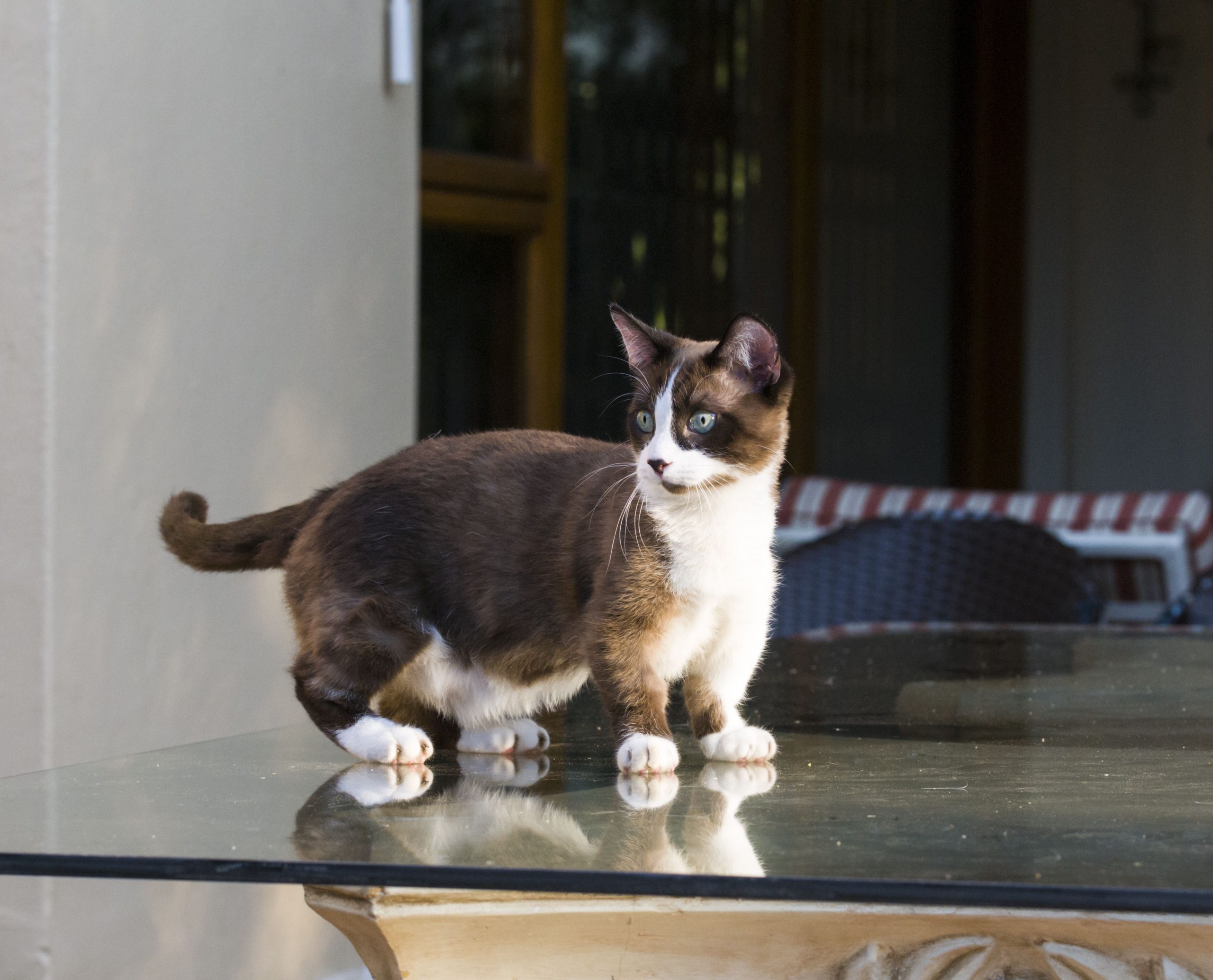
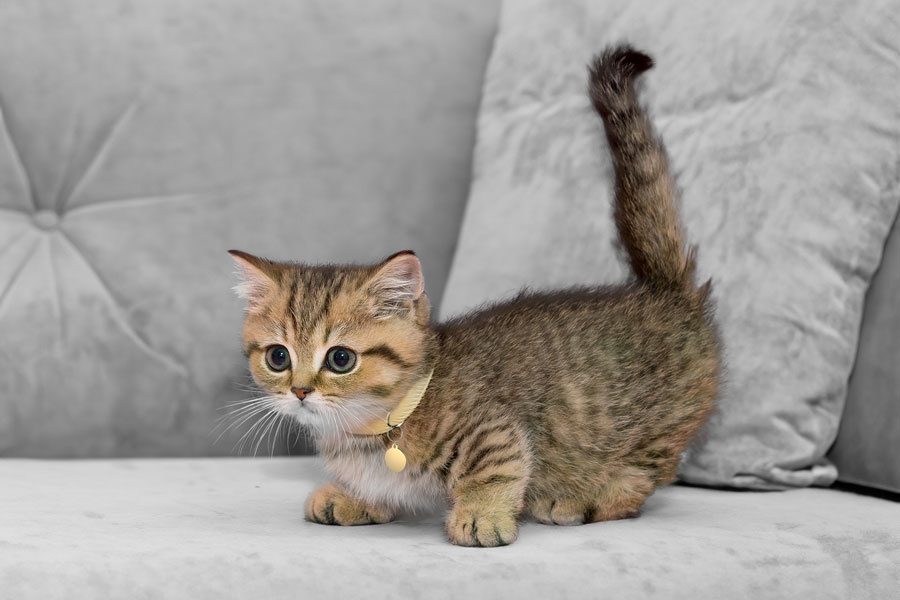
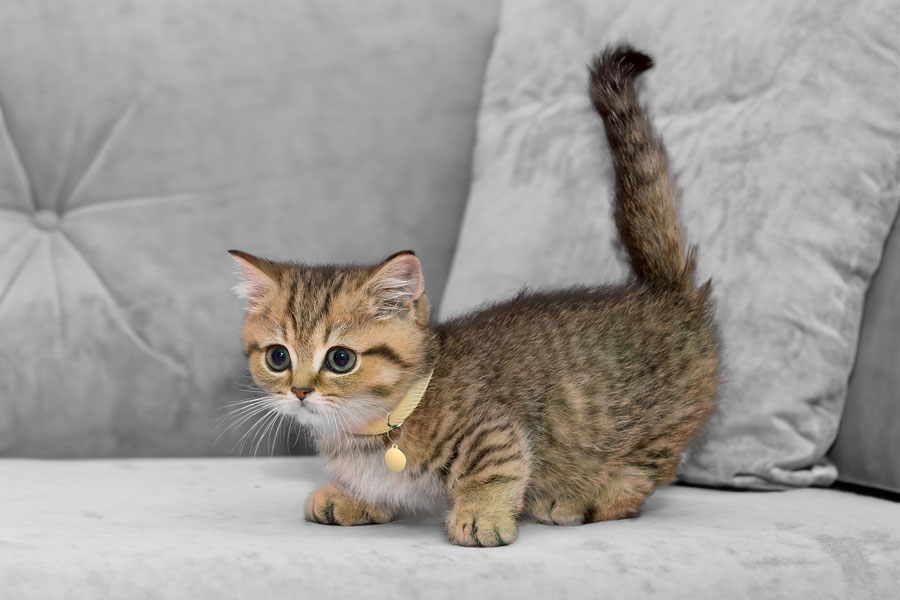
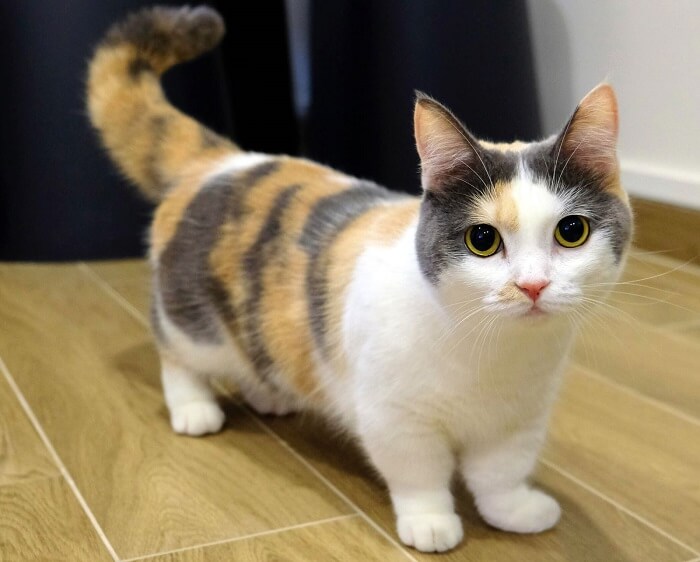
The Munchkin cat is famous for its distinctive short legs, but despite their height, they are incredibly agile and active. These cats are friendly, social, and affectionate, and they love being around their human companions. They are playful and energetic, maintaining a kitten-like behavior well into adulthood.
Munchkins are very adaptable, getting along with other pets and children. They are curious and intelligent cats that love to explore their surroundings, often running and jumping (surprisingly well for their short legs!) to satisfy their playful nature.
Their short legs don’t hinder their mobility, as they can run and climb like other cats. Despite their small stature, Munchkins are strong, with a muscular build, and they retain the agility and grace of other cat breeds.
Care
Nutrition
Munchkins, like all cats, thrive on a well-balanced diet rich in high-quality protein. Their diet should include wet food or a mix of wet and dry food to support their energy levels and help maintain their compact, muscular build. Munchkins are particularly energetic, so it’s important to provide them with the nutrition they need to stay active and healthy.
Due to their small size, portion control is important to avoid overfeeding, especially since they may have a tendency to become overweight. Make sure to offer them high-protein meals to maintain a healthy weight and to prevent obesity-related health issues.
Grooming
The grooming needs of Munchkin cats depend on the length of their coat. Munchkins can have either short or long fur, and grooming requirements vary accordingly.
Short-haired Munchkins require minimal grooming and only need to be brushed once a week to remove loose fur.
Long-haired Munchkins have slightly higher grooming needs and should be brushed two to three times a week to prevent tangling and matting.
Regular nail trimming, dental care, and ear cleaning should be included in their grooming routine. While their short legs may limit their climbing ability, they remain agile enough to reach most surfaces, so keeping up with regular grooming will help keep them in tip-top shape.
Exercise
Munchkins are playful and active cats that enjoy interactive play sessions. Despite their short legs, they are capable of jumping, running, and climbing with impressive agility. Their love of exploration and playful nature means they will happily engage in games like fetch, chasing laser pointers, or climbing cat trees.
Munchkins are quite intelligent and enjoy problem-solving, so interactive toys, puzzle feeders, and games that challenge their mind are also great ways to keep them entertained.
It’s important to provide Munchkins with enough stimulation to prevent boredom, as they are curious and highly social creatures. Interactive play and mental challenges will help them burn off their abundant energy.
Health
The Munchkin cat is generally a healthy breed, but due to its unique short legs, there are a few potential health concerns to be aware of:
Spinal Issues: The genetic mutation that causes the short legs can also affect the spine, leading to conditions such as lordosis (a curvature of the spine) or scoliosis (side-to-side curvature). However, not all Munchkins develop these conditions, and many lead happy, healthy lives.
Arthritis: Like all cats, Munchkins can develop arthritis, especially as they age. Regular vet visits and monitoring of their mobility are important.
Obesity: Munchkins are prone to gaining weight, especially if they are not kept active. Ensuring they maintain a healthy diet and exercise routine is key to avoiding obesity-related issues.
Routine check-ups and regular physical activity will help keep your Munchkin healthy and happy throughout their life.
History
The Munchkin cat’s most recent history began in the 1980s when breeders started selectively breeding short-legged cats. However, records of short-legged cats go back centuries, with mentions of such cats in Europe and Asia. The Munchkin was officially recognized as a distinct breed in the 1990s, and its popularity grew due to its endearing personality and unique physical appearance.
The breed’s short legs are the result of a genetic mutation that causes a condition called achondroplasia, which affects bone development and results in shorter limbs. Despite concerns about health issues related to their legs, Munchkins are generally healthy cats when bred responsibly.
The Munchkin’s playful, energetic personality combined with its cute, “dachshund-like” stature has made it one of the most beloved and distinctive cat breeds today.