

Height
23–28 cm (at shoulder)
Adult Weight
3.2–4.5 kg
Life Span
12–15 years
Origin
United Kingdom / United States
Personality and Temperament
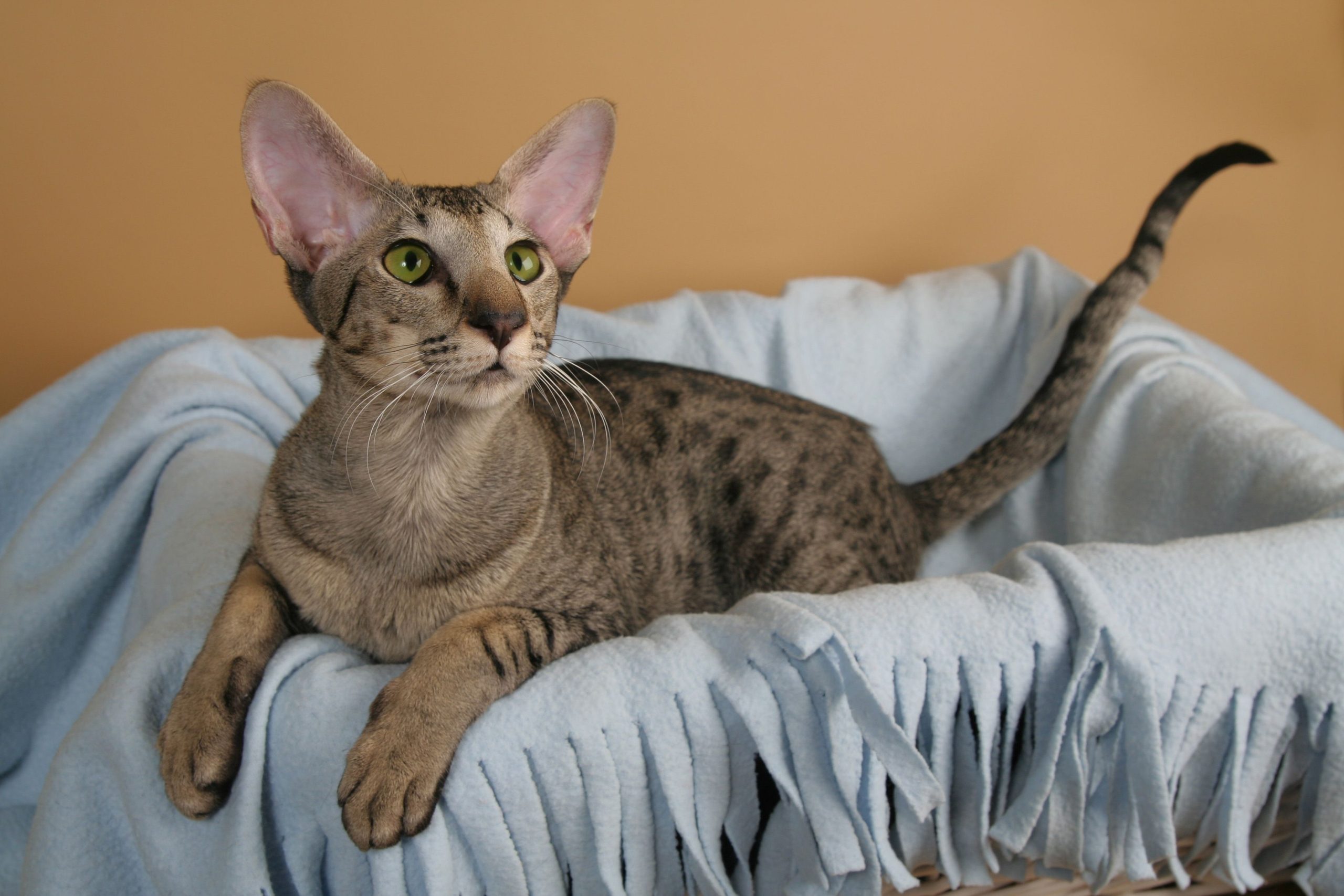
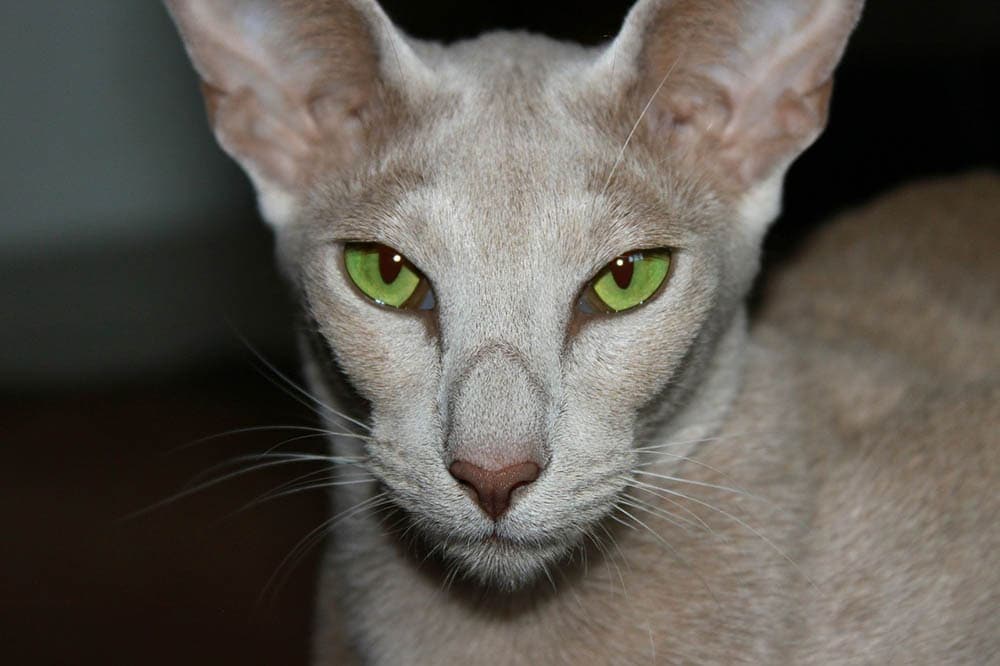
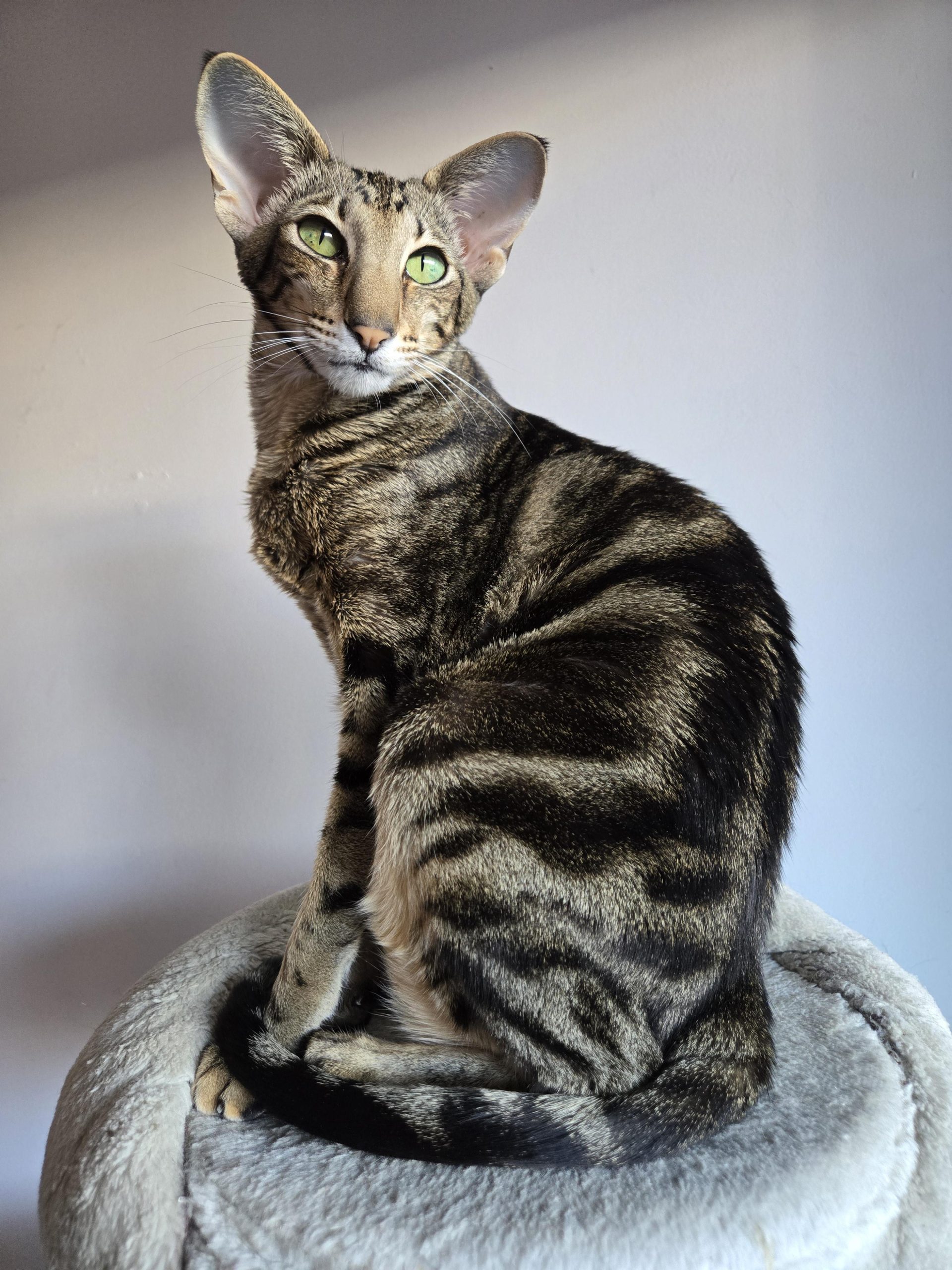
The Oriental Shorthair is a sleek, elegant breed known for its distinctive large ears, almond-shaped green eyes, and fine, short coat that comes in a stunning array of colors and patterns. This breed is essentially a color variation of the Siamese, selectively bred to achieve a vast spectrum of non-pointed colors.
These cats are famed for their intensely social, highly talkative, and extremely intelligent personality. Oriental Shorthairs form exceptionally strong, almost obsessive, bonds with their human companions and demand constant involvement in daily activities.
They are not aloof or reserved; they are energetic, playful, and thrive on attention. Owners should be prepared for frequent, loud, and often persistent vocalization—they love to “chat” and express their opinions. Because of their need for companionship and stimulation, they do not tolerate being ignored or left alone for long periods. They are best suited for active homes where they have consistent company, whether human or feline (they often do well with another Oriental or Siamese).
Care
Nutrition
Oriental Shorthair cats do not have unique nutritional needs; however, maintaining their lean, tubular, and graceful body condition is important. They possess a high metabolism due to their energy levels, so providing a consistent, high-quality diet that is high in protein is essential to sustain their athletic build. While their activity generally helps manage weight, owners should still offer appropriate portions and avoid free-feeding, as excess weight detracts significantly from their sleek, elegant appearance.
Grooming
Grooming the Oriental Shorthair is one of the easiest tasks of ownership. They possess a very short, fine, and close-lying single coat that has virtually no undercoat.
Their coat requires minimal attention, usually just a quick wipe down or gentle rub once per week with a soft cloth or rubber brush to remove loose hairs and enhance their natural glossy shine.
They are light shredders, making them a popular choice for people who are particular about pet hair. Regular grooming sessions should be viewed primarily as an opportunity for the interaction and attention they crave.
Exercise
The Oriental Shorthair possesses a remarkably high energy level and an acute intelligence that requires daily commitment to exercise and engagement. These cats are not content to lounge all day. Their exercise regimen should include:
Interactive Play: Daily, vigorous play sessions are essential. They excel at fetch and enjoy challenging games that utilize their brainpower.
Agility: Due to their intelligence and agility, they can be easily trained to walk on a leash or navigate simple indoor obstacle courses.
Environmental Enrichment: They need stimulating toys, tall climbing structures, and access to window views to satisfy their curiosity and prevent boredom-induced mischief.
Consistent physical and mental activity is vital for their emotional stability and overall happiness.
Health
The Oriental Shorthair is generally a healthy breed, known for its hardiness. However, due to its close lineage with the Siamese, it shares some genetic predispositions that responsible breeders monitor:
Amyloidosis: This is a condition where an abnormal protein (amyloid) deposits in body organs, primarily the liver.
Progressive Retinal Atrophy (PRA): A condition that can lead to vision loss.
Prospective owners should ensure the breeder has performed screenings and maintained a transparent health history of the breeding line. Additionally, due to their slim body type, their thin tails can be prone to injury if handled roughly, emphasizing the need for gentle handling.
History
The history of the Oriental Shorthair is one of deliberate creation and expansion of the color palette of the Siamese. The breed was largely developed in the United Kingdom and the United States starting in the 1950s.
Breeders wanted to retain the elegant, distinctive body type, head shape, and intelligence of the Siamese, but without the restricted “pointed” color pattern. They began crossing the Siamese with domestic cats (especially the British Shorthair and Russian Blue) and eventually backcrossing the offspring with Siamese cats. This process introduced genes for a wide variety of colors and patterns (such as solids, tabbies, and bi-colors) while preserving the core Siamese structure.
The breed was first officially recognized by the Cat Fanciers’ Association (CFA) in the U.S. in 1977. They quickly gained recognition from other major international cat associations. Because of the vast number of colors (over 300 color/pattern combinations are possible), they were dubbed the “Ornamental” cat before settling on the name Oriental Shorthair. Today, the Oriental Shorthair is celebrated for its diverse beauty and its incredibly engaging, dog-like personality.